
What Is Specialty Coffee? And how to find the best in Dubai
“Specialty coffee” is everywhere on Dubai café signs, but it has a real meaning. Here is what makes coffee specialty, how it differs from commercial coffee, how to spot a genuine specialty café, and how MR JADE’s own roast on Emaar Boulevard fits in.

What is specialty coffee?
Specialty coffee is high-quality coffee that scores 80 points or more out of 100 when graded by trained cuppers, using the Specialty Coffee Association’s standards. It has very few defects, distinct flavour, and is usually traceable to a specific farm or region. In practice, the term also covers the care that follows: precise roasting, fresh grinding and skilled brewing.
Put simply, specialty coffee is about the whole chain, from farm to roaster to the barista who makes your cup.
| Specialty coffee | Commercial coffee | |
|---|---|---|
| Quality score | 80+ on the SCA 100-point scale | Usually below 80, or ungraded |
| Defects | Very few, strictly limited | More tolerated |
| Traceability | Often to a farm, region or lot | Usually blended from many sources |
| Roasting | Small batches, tuned to each coffee | Large-scale, often dark to mask flaws |
| Flavour | Distinct and complex: fruit, chocolate, florals | Generic, often bitter or flat |
| Freshness | Roasted recently, ground to order | Can sit for months |
| Brewing | Dialled in by trained baristas | Often automated |
The 80-point threshold comes from the Specialty Coffee Association’s cupping protocol. Many cafés use “specialty” more loosely, so check the signs below.
How coffee earns the “specialty” label.
Coffee is graded through “cupping”: a standardised tasting where trained professionals, often licensed Q Graders, smell and taste brewed samples and score them on attributes such as aroma, flavour, acidity, body, balance and aftertaste. Green beans are also inspected for defects. Coffee that clears 80 points with minimal defects qualifies as specialty grade.
| Score | Grade |
|---|---|
| 90–100 | Outstanding |
| 85–89.99 | Excellent |
| 80–84.99 | Very good: the entry point for specialty |
| Below 80 | Not specialty grade |
Aroma & flavour
How appealing and distinctive the coffee smells and tastes.
Acidity & body
The brightness on the tongue and the weight or texture in the mouth.
Balance & aftertaste
How well the elements work together, and how long the good flavours linger.
Uniformity & clean cup
Consistency across cups and freedom from off-flavours.
Specialty coffee is a farm-to-cup idea.
A great green bean can still become an average cup. That is why specialty coffee is about every step, not just the score. Each link in the chain can add or lose quality. Read more about our journey in from farm to cup.
1. The farm
Altitude, variety, soil and careful picking of ripe cherries set the coffee’s potential.
2. Processing
Washed, natural or honey processing shapes sweetness, acidity and fruitiness.
3. Roasting
The roaster unlocks or hides the bean’s character. See light vs medium vs dark roast.
4. Freshness
Coffee tastes best within weeks of roasting and should be ground just before brewing.
5. Water & grind
Clean water and the right grind size for each method are essential for a balanced cup.
6. The barista
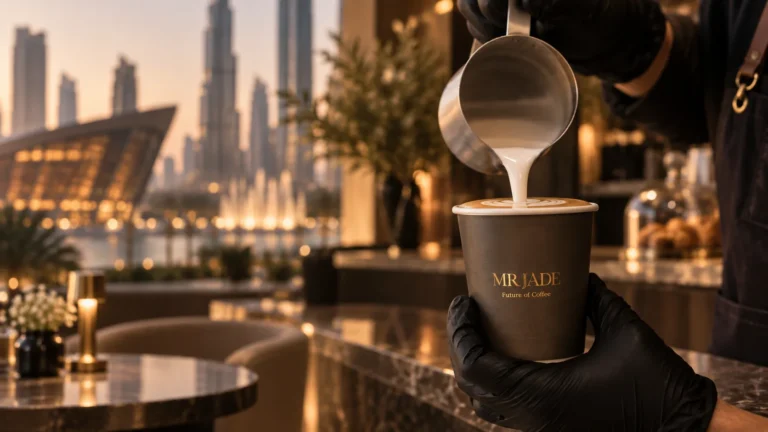
Dose, temperature, timing and milk texture turn good coffee into a great drink.
Why specialty coffee is mostly Arabica.
There are two main commercial coffee species. Arabica grows at higher altitudes, matures slowly and develops more sweetness, acidity and complex flavour, so the vast majority of specialty coffee is Arabica. Robusta is hardier, more bitter and has roughly twice the caffeine; it is common in instant and commercial blends, though high-quality “fine Robusta” exists too. For how this affects your energy, see our coffee caffeine chart.
Arabica
Sweeter, more acidic, more aromatic. Grown high and slow. The specialty standard.
Robusta
Bolder, more bitter, more caffeine. Hardier and cheaper to grow.
Altitude matters
Higher farms usually mean denser beans and brighter, more complex flavour.
Variety matters
Within Arabica, varieties such as Bourbon, Typica or Geisha each taste distinct.
How to spot a real specialty coffee shop.
Dubai has one of the most exciting café scenes in the world, but not every “specialty” sign means the same thing. These are the signs we look for ourselves. For our take on the neighbourhood, see best coffee shops in Downtown Dubai.
A clear roast story
The café can tell you who roasts its coffee and what makes it special.
Brew methods beyond espresso
Pour-over options such as a V60 show confidence in the coffee itself.
Ground to order
Beans are ground fresh for each drink, never pre-ground in bulk.
Baristas who talk coffee
Staff can describe flavour, recommend a drink and adjust it for you.
Good milk, good texture
Silky microfoam and quality milk. See oat vs coconut vs dairy milk.
It tastes clean
No harsh, burnt or stale notes, even in a plain black coffee.
Specialty coffee at MR JADE.
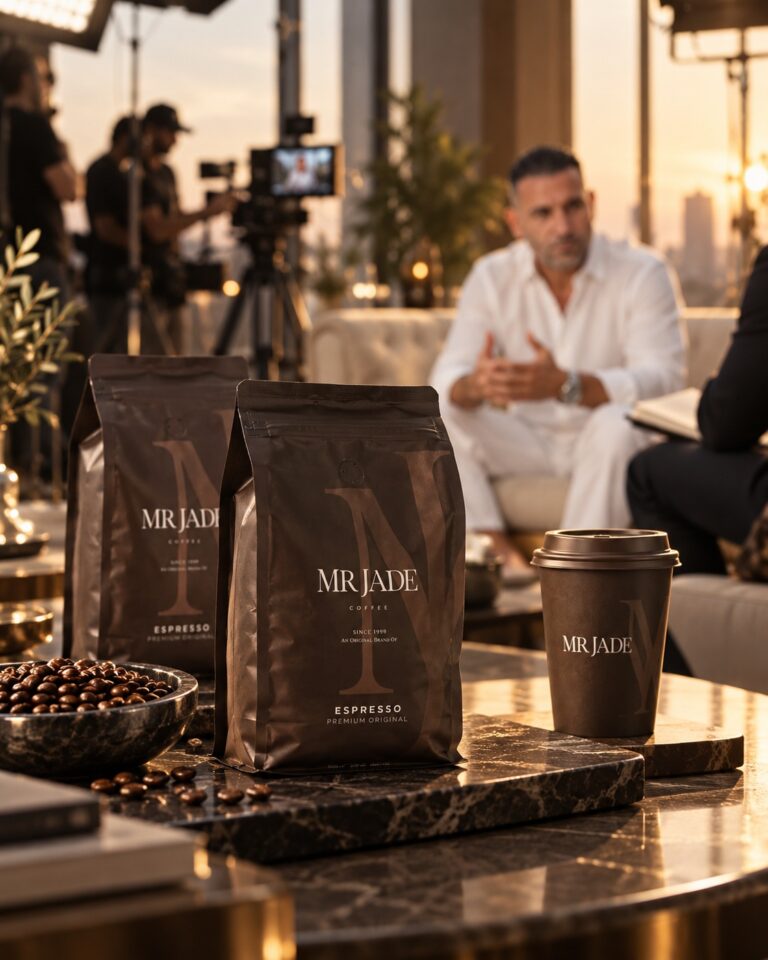
At MR JADE, our coffee is our own specialty roast, rooted in a roasting tradition passed down from Jade Sen’s grandfather. We serve it through espresso, hand-brewed V60 and Turkish coffee, and pair it with fresh milk delivered daily from a farm in Dubai, oat milk, or coconut milk from Bali. Read the full story in our story and see the full experience in specialty coffee in Downtown Dubai.
| Drink | Why try it |
|---|---|
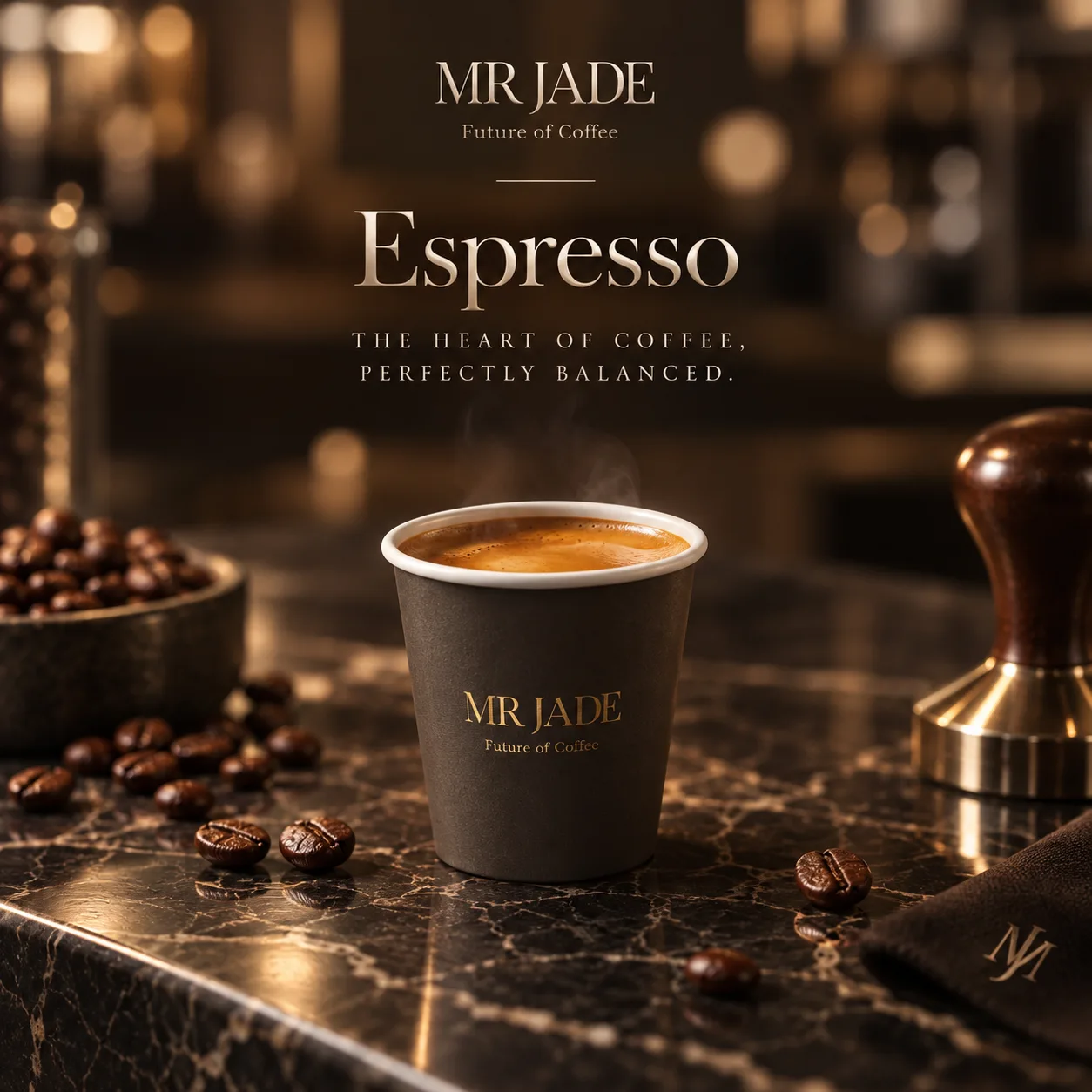
| Espresso | The purest expression of the roast, single or double |
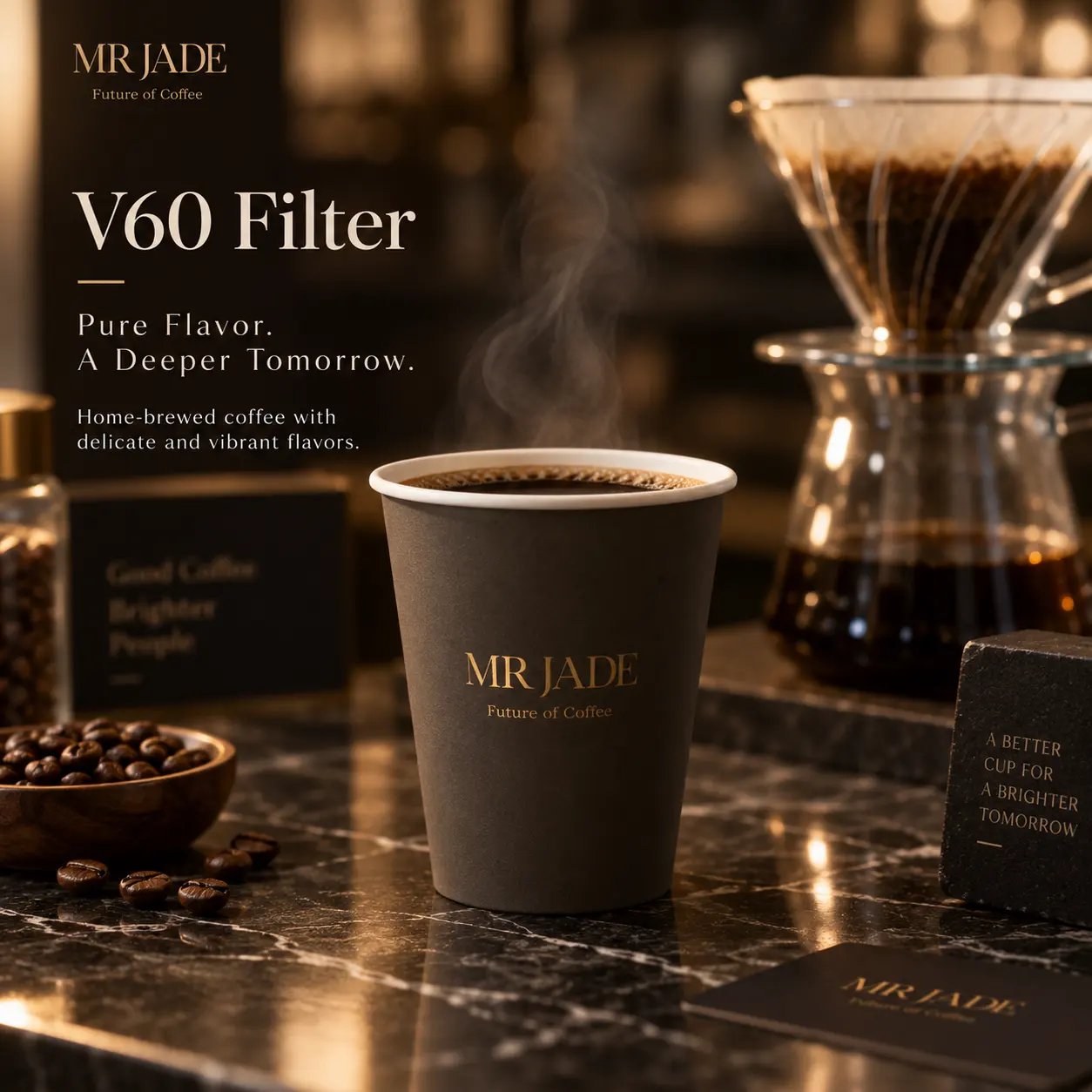
| V60 Filter | Hand-brewed for clarity and aroma; the best way to taste a coffee black |
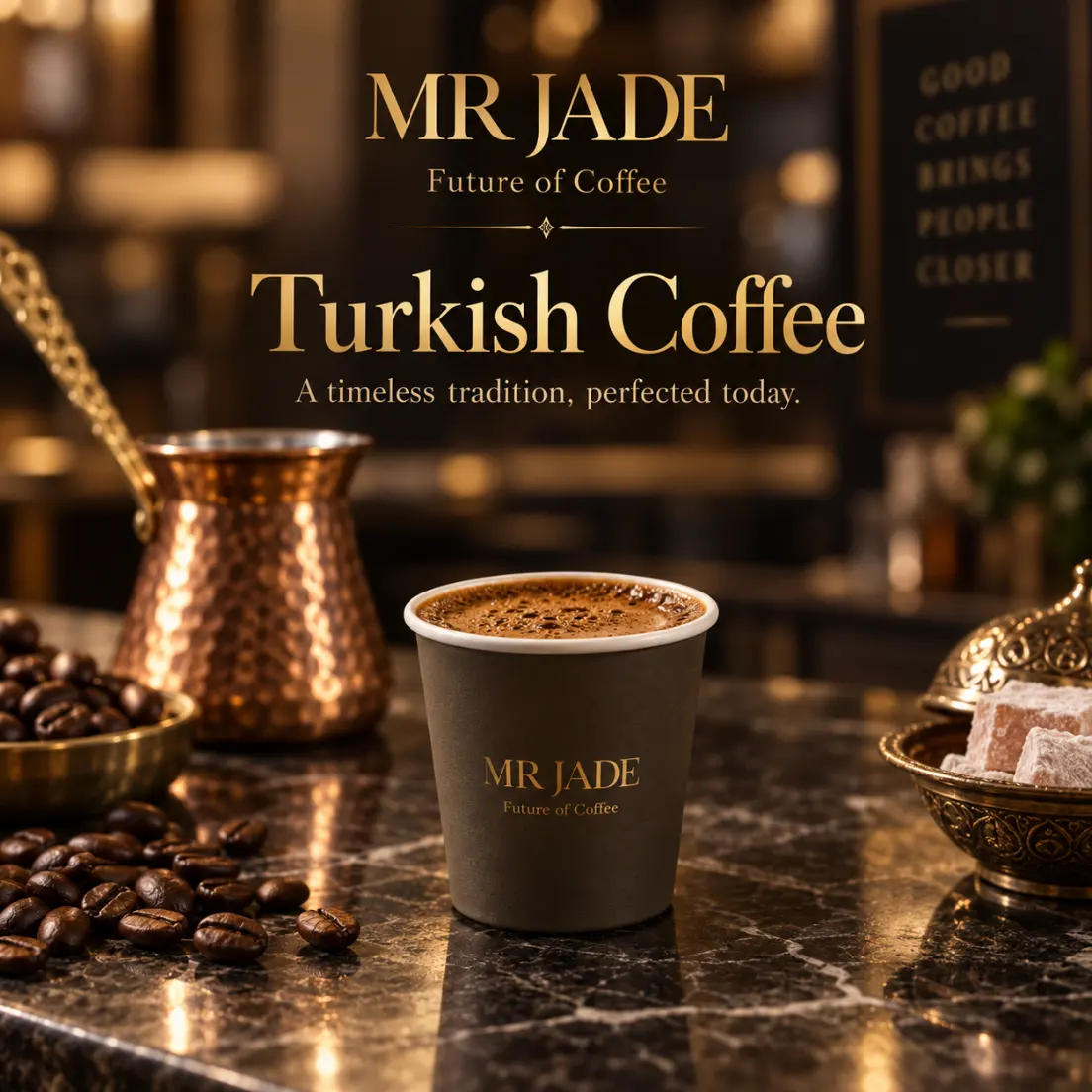
| Turkish Coffee | Finely ground and slow-prepared, served in 4 oz |
| Flat White | Double espresso with silky milk in 8 oz: coffee-forward |
| Spanish Latte | Our bestseller, with sweetened condensed milk |
| Cold Brew | Smooth and low in acidity for Dubai heat |
How to order specialty coffee like a regular.
You don’t need to know the jargon. A few simple habits help you taste the difference specialty coffee makes.
Try it black first
An espresso or V60 shows the roast honestly. Add milk afterwards if you prefer.
Let it cool a little
Flavours open up as coffee cools from very hot to warm. Notice how it changes.
Tell the barista what you like
Fruity, chocolatey, strong or mild: they can steer you to the right drink.
Compare side by side
Order an espresso and an Americano to taste the same coffee two ways.
Specialty coffee myths.
A few common misconceptions about what “specialty” really means.
| “Specialty means fancy drinks.” | No. It refers to the quality of the coffee itself, not syrups or toppings. |
|---|---|
| “Specialty coffee is always light roast.” | No. Any roast level can be specialty if the coffee and roasting are excellent. |
| “It’s just a marketing word.” | It is sometimes used loosely, but it has a real definition based on graded quality. |
| “It’s only for coffee experts.” | Not at all. A well-made latte from specialty coffee simply tastes better. |
Specialty coffee near Downtown’s landmarks.
MR JADE Coffee is at R01, Burj Crown, Emaar Boulevard. Sit at our outdoor tables, work from our work-friendly café, grab it as takeaway, or order through Deliveroo or noon Food via our delivery page.
| Near Dubai Mall | Open from 7 AM |
|---|---|
| Near Burj Khalifa | A few minutes along Emaar Boulevard |
| Near Dubai Opera | Before a show |
| On Emaar Boulevard | Right on the Boulevard at Burj Crown |
Prefer Arabic? Read مقهى في بوليفارد وسط مدينة دبي.
Key takeaways
- Specialty coffee scores 80+ out of 100 on the Specialty Coffee Association’s scale, with minimal defects.
- It is usually Arabica, often traceable to a farm or region, and freshly roasted.
- Quality depends on the whole chain: farm, processing, roasting, freshness and the barista.
- A real specialty café can tell you its roast story, grinds to order and offers methods like V60.
- Taste MR JADE’s own specialty roast at R01 Burj Crown, Emaar Boulevard, from 7 AM daily.
Specialty coffee: your questions
Short answers before you order.
What is specialty coffee?
Coffee graded 80 points or more out of 100 by trained cuppers under Specialty Coffee Association standards, with very few defects and distinct flavour.
What is the difference between specialty and regular coffee?
Specialty coffee is higher graded, more traceable, roasted with more care and brewed with more skill. Regular commercial coffee is usually blended, roasted darker and less fresh.
Who decides if coffee is specialty?
Trained professionals, often licensed Q Graders, score coffee through a standardised tasting called cupping and inspect the beans for defects.
Is specialty coffee always Arabica?
Almost always, because Arabica develops more complex flavour. High-quality fine Robusta can also qualify, but it is much rarer.
Is specialty coffee stronger?
Not necessarily. Strength depends on the dose and the number of espresso shots. Specialty coffee tastes more distinct, not more caffeinated.
Why is specialty coffee more expensive?
Careful farming, hand-picking, small-batch roasting, freshness and skilled preparation all cost more than mass-produced coffee.
How can I tell a good specialty café in Dubai?
Look for a clear roast story, brew methods like V60, coffee ground to order, knowledgeable baristas and a clean, balanced taste.
Does specialty coffee have to be single origin?
No. Single-origin coffees show off one place, but carefully built blends of specialty-grade beans are specialty coffee too, and are often used for balanced espresso.
How fresh should specialty coffee be?
It usually tastes best within a few weeks of roasting, and should be ground just before brewing to keep its aroma.
What coffee does MR JADE serve?
Our own specialty roast, rooted in a roasting tradition passed down from Jade Sen’s grandfather, served as espresso, V60, Turkish coffee and milk drinks.
Where can I get specialty coffee near Dubai Mall?
MR JADE Coffee at R01, Burj Crown, Emaar Boulevard, a short walk from Dubai Mall and Burj Khalifa, open from 7 AM daily.
Taste specialty coffee on the Boulevard.
MR JADE Coffee, R01, Burj Crown, Emaar Boulevard, Downtown Dubai, UAE.
Hours: Sunday–Thursday 7 AM–11 PM · Friday–Saturday 7 AM–12 AM
4 Comments