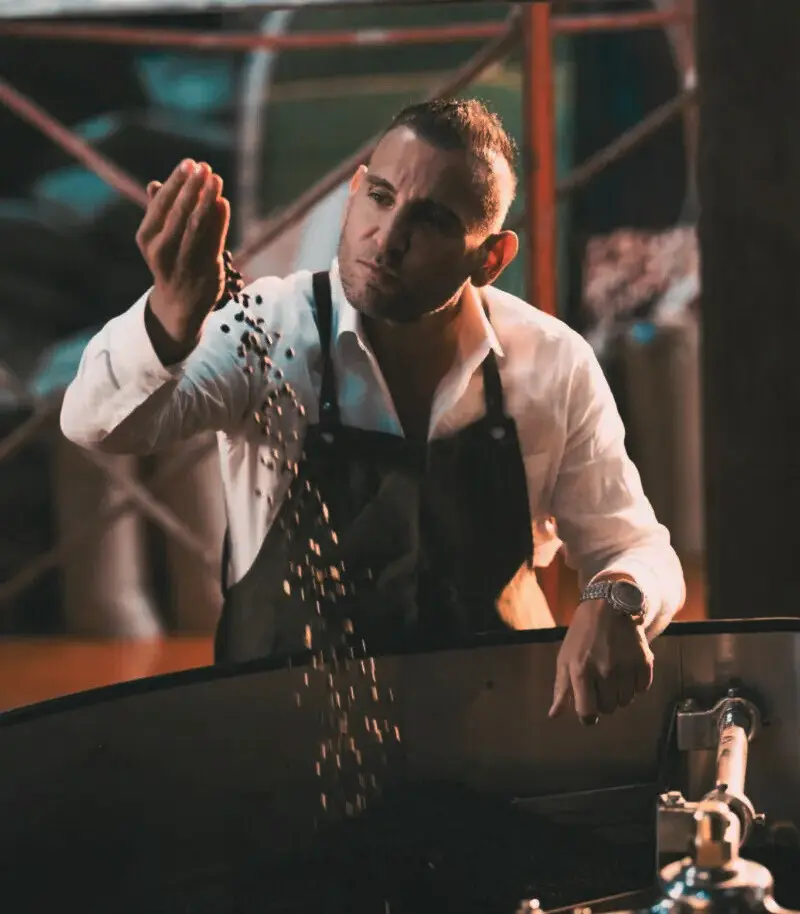
The global journey behind MRJADE Coffee.
Before a cup reaches Downtown Dubai, the coffee has already travelled through farms, quality evaluation, roasting and brewing. MRJADE’s published story connects those stages across Latin America, Hamburg, Istanbul and Dubai.

MRJADE’s coffee story is built around a chain of decisions, not one “premium bean” claim.
According to the brand’s published sourcing story, MRJADE works with coffee from Costa Rica, Brazil and Colombia, sends beans through quality evaluation in Hamburg, applies roasting in Istanbul, and serves the final coffee in Dubai. The value of the journey lies in how each stage protects flavour, consistency and the work already done at origin.
Five stages between origin and the final cup.
Each step changes what eventually reaches the customer.
Grow
Coffee begins with region, climate, soil, harvest timing and farm practices.
Choose
MRJADE’s published story describes evaluation of bean size, moisture and physical integrity.
Evaluate
Hamburg is described as the first refinement stage before beans move forward.
Roast
Roasting develops aroma, sweetness, body and the balance that defines the finished profile.
Brew
Time, pressure and temperature turn roasted coffee into the drink handed across the bar.
Three countries named in the MRJADE sourcing story.
MRJADE’s live article identifies Costa Rica, Brazil and Colombia as key coffee-growing origins used by the brand.
High-grown character
Costa Rica is named by MRJADE among its sourcing regions. The country’s coffee is widely associated with carefully managed production and clean, structured cup profiles.
Body & sweetness
Brazil is another origin listed in the brand’s published story and plays an important role in the global coffee trade.
Balance & aroma
Colombia completes the three-origin list highlighted by MRJADE’s current farm-to-cup article.
The farm has already done most of the difficult work before roasting begins.
Coffee quality is shaped long before a barista touches the beans. Variety, altitude, rainfall, ripeness, harvest timing and post-harvest processing all influence the raw material that reaches a roaster.
MRJADE’s current article says its coffee is selected from farms using responsible and sustainable cultivation and that beans are harvested at peak ripeness. Those are brand-published claims; the page does not currently identify specific farms or third-party certifications, so this upgraded version keeps the wording grounded rather than turning it into a broader certification claim.
The quality-control stage.
MRJADE’s published process says coffee travels to Hamburg after harvest, where batches are evaluated for consistency and physical quality.
The article specifically mentions bean size, moisture content and overall integrity. Those checks do not create quality by themselves; they help identify whether the raw coffee is suitable for the next stage.
The roasting stage.
After evaluation, the coffee story moves to Istanbul. The current article describes MRJADE’s roasting as a combination of traditional methods and modern control.
Temperature, duration and roast development shape sweetness, acidity, body and aroma. Good roasting should reveal useful qualities in the coffee rather than simply make every origin taste the same.

Dubai is where the global journey becomes a customer experience.
The coffee reaches MRJADE’s Dubai operation after sourcing, evaluation and roasting. This is where precision brewing, service, presentation and the physical café all become part of the final result.
The strongest version of “farm to cup” is not a slogan. It is a chain where every stage protects the work of the stage before it.
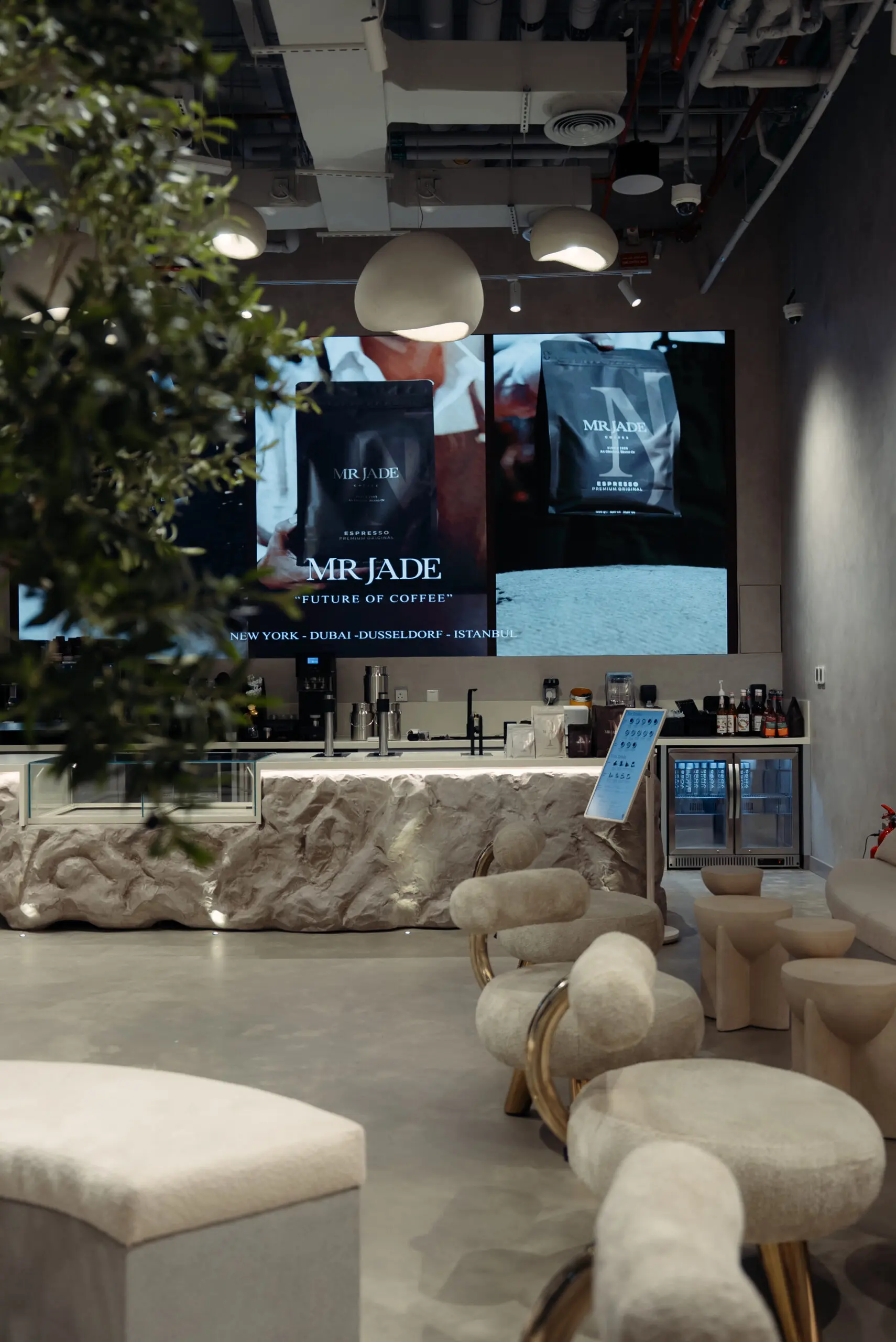
The cup is served in the middle of Downtown’s daily rhythm.
MRJADE Coffee is at Burj Crown on Emaar Boulevard, close to Dubai Opera, Burj Khalifa and The Dubai Mall. That location shapes how the brand serves coffee today: specialty drinks, quick takeaway and a premium environment without forcing every customer into a long sit-down experience.
The route may span continents, but the final measure is still simple: does the coffee taste good enough to order again?
Traceability is useful when it explains decisions, not just distance.
A long route does not automatically make coffee better. What matters is whether each stage has a clear purpose: origin influences the raw coffee, evaluation checks consistency, roasting develops the profile, and brewing determines how much of that profile survives into the cup.
That is why the strongest part of MRJADE’s farm-to-cup story is not the number of cities involved. It is the attempt to connect sourcing, quality control, roasting and service into one coherent process.
To understand the wider hospitality philosophy around that process, read Beyond the Brew. To meet the person behind the brand, see MRJADE: The Man Behind the Vision.
Origin matters. Process matters. Taste decides.
Specialty coffee is only successful when all the upstream work survives the final extraction. At MRJADE, that last stage happens in Downtown Dubai — espresso, iced coffee and takeaway cups included.