Does matcha have caffeine?
Yes. Matcha is naturally caffeinated. The useful question is how much — because the answer changes with the powder, serving size and preparation. Here is the clear comparison with coffee and regular green tea, without the “energy without a crash” mythology.
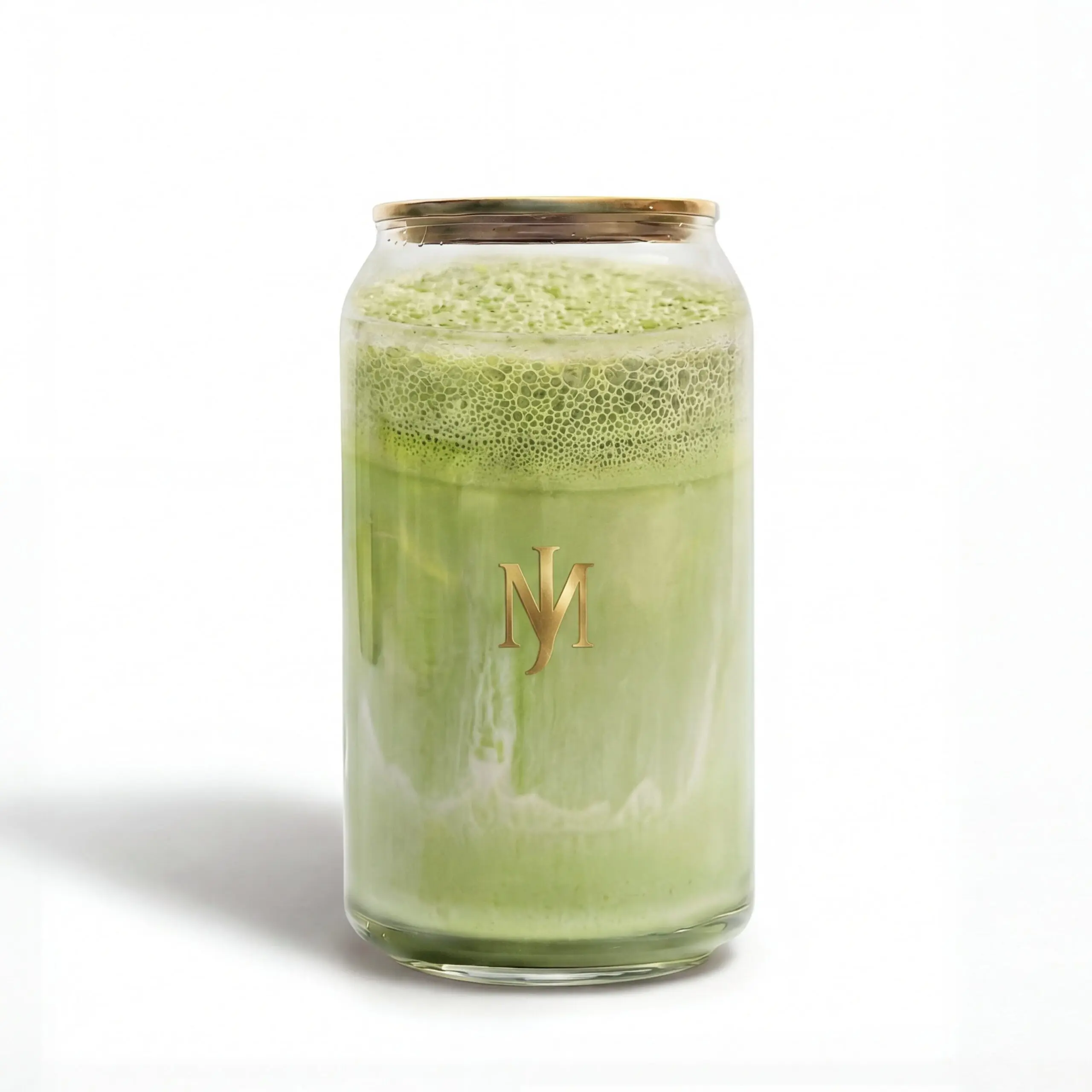
Matcha contains caffeine naturally because it is made from tea leaves.
A 2026 review summarized one ~2 g matcha portion at about 72.5 mg caffeine, but that is not a universal number. Different matcha powders and serving sizes can contain meaningfully different amounts. For context, the FDA says a typical 8-ounce cup of coffee contains around 80–100 mg.
Think in ranges, not one magic number.
The old version of this page used one fixed caffeine figure for every gram of matcha. Real tea is more variable than that.
Caffeine in an approximately 2 g matcha portion reported in data summarized by a 2026 review. It is a useful reference point, not a label value for every matcha.
FDA reference range for a typical 8-fluid-ounce cup of coffee. Coffee also varies with bean, dose, brewing method and serving size.
FDA-cited daily amount for most healthy adults that is not generally associated with negative effects. It is not a target, and individual sensitivity differs.
Where matcha sits on the caffeine spectrum.
Serving size matters enough that these categories can overlap.
| Drink | Caffeine context | What changes the number? |
|---|---|---|
| Matcha | A published ~2 g portion has been reported around 72.5 mg | Powder composition, grams used, cultivar and growing conditions |
| Brewed coffee | FDA: about 80–100 mg per typical 8 oz cup | Bean, roast, dose, brew method and cup size |
| Regular green tea | Usually less caffeine per cup than matcha because the leaf is infused rather than consumed as powder | Tea type, leaf amount, temperature and steeping time |
| Matcha latte | Depends mainly on how much matcha powder is used | Recipe and serving size; milk itself does not remove the caffeine |
Why matcha can feel different from coffee.
Matcha contains caffeine and naturally occurring L-theanine. Research on these tea compounds suggests that the combination can influence attention and mood. But that is different from claiming that matcha caffeine is absorbed in a completely different way or can never cause jitters.
L-theanine occurs naturally in tea.
Matcha contains L-theanine as well as caffeine. Shading before harvest can influence the concentration of tea compounds in the leaf.
The combination may support attention.
Human research on caffeine and L-theanine has found effects on alertness, attention and some cognitive tasks, although results depend on dose and study design.
“No jitters. No crash.”
Matcha is still caffeinated. Sensitive people can still experience restlessness, headache, anxiety, nausea or sleep disruption.
Why your matcha latte does not have one universal caffeine number.
Matcha is an agricultural product, not a standardized caffeine tablet. Caffeine concentration can differ between powders because of cultivar, growing conditions, harvest, processing and storage. Then the café or home recipe adds another variable: how many grams of powder go into the drink.
That is why “matcha has exactly 60–80 mg per gram” is too confident. If you need a precise caffeine number for a specific product, the product specification or laboratory data is more useful than a generic internet estimate.
Does adding milk reduce the caffeine?
No. Milk changes the volume, texture and nutrition of the drink, but it does not remove the caffeine already present in the matcha. A larger matcha latte may taste softer because of the milk while containing the same caffeine dose from the powder.
Does “ceremonial grade” mean more caffeine?
Not reliably. “Ceremonial grade” is a commercial quality term rather than one globally enforced caffeine standard. You should not use the grade label alone to predict how many milligrams of caffeine are in a serving.

Caffeine is part of the drink. Taste is still the reason to order it.
Hot matcha, iced matcha, milk or no milk — choose the drink for the flavour and the moment. If you are caffeine-sensitive, the amount of powder and the time of day matter more than wellness slogans.
Can matcha keep you awake?
Yes. L-theanine does not switch caffeine off. If caffeine affects your sleep, matcha deserves the same timing awareness as coffee or tea.
A natural fit for caffeine.
Many people prefer matcha earlier in the day when alertness is useful and there is more time before sleep.
Know your own cutoff.
There is no universal “4 PM rule.” Caffeine sensitivity and bedtime vary, so your personal sleep response matters.
Not automatically sleep-friendly.
If caffeine keeps you awake, an evening matcha may do the same. “Calm” does not mean caffeine-free.
Caffeine guidance may be different. The old article implied matcha can be “safer than coffee” in pregnancy because it has antioxidants; that is not a sound safety comparison. Use age- and pregnancy-specific guidance from a qualified clinician.
Want a lighter matcha? Change the dose, not the story.
If you want less caffeine, using less matcha powder is the most direct approach. That also changes the flavour, so you may want to adjust milk and water to keep the drink balanced.
What does not work reliably is assuming that “culinary” matcha always has less caffeine or that a particular grade automatically gives a predictable dose. Product composition varies.
If you are making your own drink, our how to make a matcha latte guide gives the full method. For a broader comparison with espresso and brewed coffee, see matcha vs coffee.
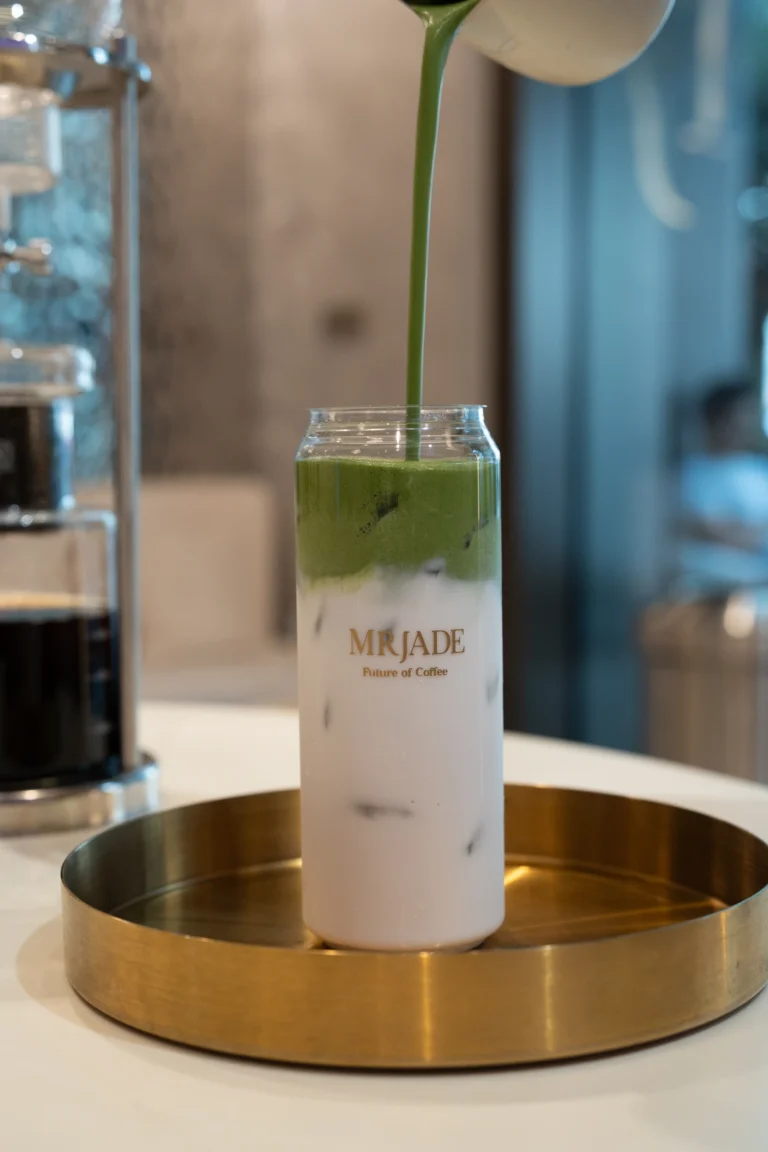
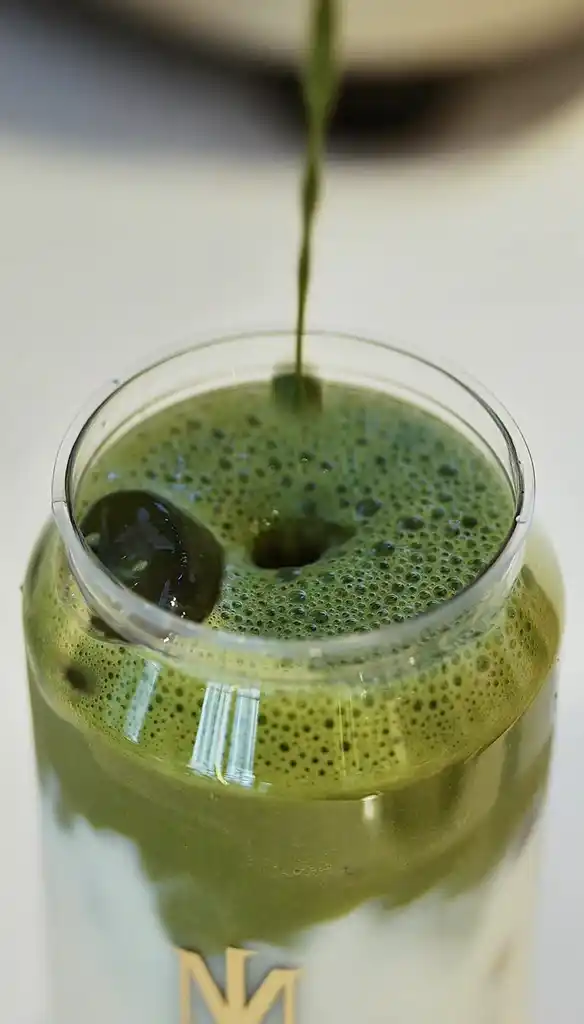
Matcha at MRJADE Coffee.
At MRJADE, matcha sits alongside specialty coffee as its own proper drink category. We serve it hot and iced at Burj Crown on Emaar Boulevard in Downtown Dubai, close to Dubai Opera, Burj Khalifa and The Dubai Mall.
Explore the matcha latte menu, the iced matcha latte, or our matcha powder.
The caffeine questions worth answering precisely.
Does matcha have caffeine?
Yes. Matcha naturally contains caffeine because it is made from the Camellia sinensis tea plant.
How much caffeine is in matcha?
It varies. A 2026 review summarized a roughly 2 g matcha portion at around 72.5 mg caffeine, but real powders and serving sizes differ. Treat this as a reference point rather than a universal value.
Does matcha have less caffeine than coffee?
Often, but the ranges overlap. The FDA gives roughly 80–100 mg for a typical 8-ounce coffee, while matcha depends on the caffeine concentration of the powder and how much is used.
Will matcha keep me awake?
It can. Matcha contains caffeine, so late-day use can interfere with sleep in people who are sensitive to caffeine.
Does L-theanine cancel out caffeine?
No. L-theanine may influence how caffeine-related alertness feels and has been studied together with caffeine, but it does not remove the caffeine or guarantee no jitters.
Can I reduce the caffeine in a matcha latte?
The simplest way is to use less matcha powder. Adding more milk dilutes the taste but does not remove the caffeine already present.
Can I drink matcha every day?
Many adults can include matcha regularly, but total caffeine intake matters. The FDA cites 400 mg per day for most healthy adults as an amount not generally associated with negative effects, while individual sensitivity varies.
References & further reading
- U.S. Food & Drug Administration. Spilling the Beans: How Much Caffeine is Too Much? FDA
- Kochman J, et al. Health Benefits and Chemical Composition of Matcha Green Tea: A Review. Molecules. 2020. PubMed
- Matcha as a Source of Bioactive Compounds: A Review of Health-Promoting Properties and Potential Applications. 2026. PMC
- Dietz C, Dekker M. Effect of Green Tea Phytochemicals on Mood and Cognition. PubMed
Yes, it has caffeine. It also has a place on the Downtown menu.
Hot matcha, iced matcha, specialty coffee and fast takeaway at Burj Crown on Emaar Boulevard.